The Pennsylvania Homeowner’s Guide to HVAC Lifespan, Repair, and Replacement
October 7, 2026A new HVAC system can make your home more appealing to buyers, but it doesn’t guarantee a higher selling price or a full return on what you spend. If you’re staying put, the more immediate question is whether your current equipment can still provide dependable comfort at a reasonable cost.
That decision deserves more than an age cutoff or a replacement quote. It starts with understanding what’s wrong, what can be corrected, and what you’d gain by making a change.
Does a New HVAC System Increase a Home’s Value?
It can, especially when it replaces unreliable equipment or adds heating or cooling the home previously lacked. However, increasing resale value and removing a buyer’s concern are different benefits.
A newer system may help support your asking price. Replacing a failing system may instead prevent an aging furnace or air conditioner from becoming a sticking point during negotiations. Neither outcome comes with a dependable dollar-for-dollar return.
If you’re selling soon and the equipment works safely and reliably, a service visit and maintenance records may be more useful than replacement. Ask your real estate agent how the system’s condition could affect your home’s position among comparable listings.
If a major repair is needed, get a written assessment before choosing between repairing, replacing, or negotiating a buyer credit. If you’ll remain in the home for several years, the comfort and operating costs you experience during that time also belong in the calculation.
How Long Do HVAC Systems Last in Our Area?
In Southeastern Pennsylvania and the Lehigh Valley, heating and cooling equipment won’t necessarily age at the same rate. A boiler may remain serviceable long after an air conditioner installed at the same time needs replacement. Use these ranges to plan ahead, then let your system’s condition guide your decision. You can also give us a call to discuss your concerns.
Note: Our techs will usually repair anything beyond the ages listed below, mainly electrical parts. Older R-22 unit parts (ex: compressors & coils) cannot be fixed thus must replace the system. R410A unit coils & compressors can be changed.
Example: This summer, a customer’s R22 condenser sprang a leak and shorted the compressor. These parts aren’t available, so replacement was the only fix.
| Equipment | General planning range |
| Central air conditioner | About 20–25 years |
| Air-source heat pump | About 15–20 years, with longer service possible |
| Oil or gas furnace | About 15–20 years, depending on design and condition |
| Boiler | Roughly 15–30 years, with substantial differences between condensing and cast-iron equipment |
| Ductless mini-split | About 15–20 years; some systems reach 20 years or more |
These are broad planning ranges, not local averages or replacement deadlines. Manufacturer guidance provides general expectations forcentral air conditioners,heat pumps,furnaces, andmini-splits. An inspection tells you more about your equipment’s remaining usefulness than its birthday alone.
HVAC maintenance helps preserve airflow and identify developing problems. Installation quality and equipment sizing matter, too: Poor setup can leave a system cycling improperly or struggling to meet the home’s needs.
Across southeastern Pennsylvania and the Lehigh Valley, cold winters and humid summers place different demands on equipment. A heat pump providing both heating and cooling accumulates operating hours differently from an air conditioner used only during warmer months.
What Can You Do to Help Your System Last?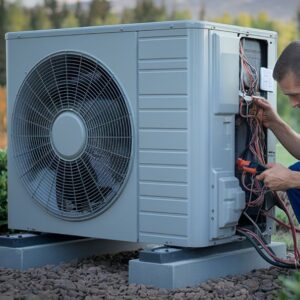
Start with the care your equipment needs: Follow its maintenance schedule, check filters regularly, and clean or replace them as directed by the manufacturer. Keep leaves and vegetation clear of outdoor equipment. If you notice unfamiliar sounds, weaker airflow, or a change in comfort, schedule service before the problem has more time to develop.
Maintenance won’t prevent every breakdown, but it can help identify problems while you still have time to address them.
See what’s included in our heating and cooling Home Comfort Plans.
Should You Repair or Replace Your HVAC System?
Start with a diagnosis and a written repair price. The useful question is what that repair will accomplish and whether the rest of the system is worth keeping. Before committing to a repair or replacement, work through these questions with your technician.
| Consideration | What to find out |
| Equipment age and repair history | Is this an isolated failure or another breakdown in a growing pattern? |
| Repair cost and warranty coverage | What will you pay after coverage, including labor and other charges? |
| Parts and refrigerant availability | Are the required materials available, and what will they cost? |
| Increasing energy consumption | Has usage increased, or are higher rates, weather, or thermostat changes driving the bill? |
| Uneven temperatures or humidity | Is the equipment responsible, or is there an airflow, ductwork, or control problem? |
| Noise and declining performance | What’s causing the change, and can the underlying problem be corrected? |
| Equipment sizing | Does the existing capacity fit the home’s current heating and cooling needs? |
For example, we had a customer with a 28-year-old furnace with a cracked heat exchange. The replacement part was available, but the labor and part costs weren’t worth it, so they chose to install a new unit.
On a different service call, our client had an Indoor variable blower motor on a 9-year-old air handler with one year of warranty left, so the part was replaced under warranty and we only charged labor; that saved them $1,800.
Have a repair quote you’re unsure about? Tell us what the system is doing and what’s been recommended.
Help Me Weigh Repair vs Replacement
What Do HVAC Repairs and Replacements Cost?
Repair costs depend on the problem, parts needed, labor, and any applicable warranty or service-plan coverage. Tune-ups, diagnostic visits, and repairs are different services, so ask what your quote includes.
Consider a rate for diagnostics and repairs is $100 per hour, plus the cost of parts. If a repair requires a special-order part, such as an ECM or variable-speed motor, the initial $100 diagnostic fee is separate and does not count toward the repair. Labor for the return visit is billed at $100 per hour, plus parts.
Here are three examples:
- AC contactor coil replacement: If the repair is completed during the same visit, the charge is $100 per hour for labor, plus $100 for the part.
- Oil furnace primary control replacement: The charge is $100 per hour for labor, plus $300 for the part.
- Special-order ECM motor replacement: The initial diagnostic fee is $100. Once the motor arrives, the return visit is billed at $100 per hour for labor, plus $2,000 for the motor.
These examples illustrate repair pricing. Your total will depend on the parts and labor required for your system.
For replacement, the equipment is only part of the price. System and fuel type, heating and cooling requirements, and efficiency level influence the selection. Ductwork repairs, electrical upgrades, ventilation changes, and difficult installation access can add to the scope.
Home size matters, but square footage alone doesn’t determine capacity. Two similarly sized properties may need different equipment because of insulation, windows, layout, and air leakage.
A partial HVAC replacement may cost less upfront if the remaining components are compatible and in good condition. Your proposal should clearly identify whether the work includes a single component, a complete heating or cooling system, or both.
Recent HVAC Installation Examples from Young’s Home Comfort
These recent projects show how equipment choices, installation requirements, and access to the property can affect HVAC replacement costs.
Hybrid heat pump installation: $10,000
Young’s Home Comfort replaced an attic air conditioning system with a hybrid heat pump that uses oil heat as backup during colder weather. Outdoor temperature sensors and isolation relays allow the system to switch automatically from the heat pump to oil heat at a set outdoor temperature.
Those controls added parts and labor to the installation. A heat pump installation with standard electric backup heat generally costs less than this configuration because it requires fewer parts and less labor.
Oil furnace replacement: $8,000
This project involved removing the existing oil furnace and installing a replacement. Oil furnace installation costs depend partly on how easily the crew can move equipment into and out of the property.
Equipment that can be rolled directly into place takes less handling than equipment that must be moved up stairs, through the house, or through tight doorways. Equipment weight also affects the labor required. Depending on the equipment involved, units can weigh approximately 400 to 1,500 pounds.
These are examples of completed projects, rather than fixed prices for every installation. An in-home assessment is necessary to evaluate your equipment, property access, and installation requirements and provide an accurate estimate.
When Should You Plan an HVAC Replacement?
It’s easier to plan for a new HVAC system when you’re not dealing with a breakdown. If a technician says yours may need replacing soon, use that time to compare options and warranties, look into financing, and pick an installation date that works for you.
Spring and fall can offer more scheduling flexibility, but don’t assume that means lower prices or an opening next week. Ask what’s available.
Some problems can’t wait. If you have an active leak, an electrical issue, a possible combustion problem, or no heat in freezing weather, get help right away. If water is leaking around your furnace or air conditioner, see our HVAC Leak Diagnostic Guide for the common causes and what our technicians check first. Have the problem checked and make sure your home is safe. Then you can decide whether repair or replacement makes sense.
For installations, we typically have more availability mid-spring before heat sets in and early fall before the cold. For those who lose heat while waiting, we do have emergency space heaters to lend.
What Young’s Evaluates Before Recommending a New System
A useful recommendation connects the proposed equipment to the home it will serve.
Young’sinstalls and services heating and cooling equipment, including heat pumps, oil and gas furnaces and boilers, central air conditioning, and ductless air conditioning. The assessment should establish which approach fits the property and what supporting work is needed.
Equipment, Fuel Source, and Home Improvements
The starting point is the existing system, fuel source, service history, and comfort concerns. Proper sizing considers insulation, windows, sun exposure, air leakage, and layout.
A Manual J load calculation helps determine the home’s heating and cooling needs by estimating heat loss and heat gain. It takes time to complete because it accounts for details such as insulation R-values, window sizes, and ceiling heights. An undersized system may run for long periods and struggle to maintain the desired temperature, while an oversized system may short-cycle, turning on and off too frequently.
An addition, finished space, or insulation upgrade may have changed the home’s needs since the original installation. Simply matching the old equipment’s capacity can overlook those changes.
Ductwork, Heat Distribution, and Seasonal Comfort
For a ducted system, duct condition, configuration, and return airflow affect what the equipment can deliver. A home with radiators or hot-water baseboards requires a different discussion about heat distribution and how cooling could be added.
The assessment should also account for winter heating demands and summer humidity. A room that feels damp despite reaching the thermostat setting presents a different problem from one that never receives enough conditioned air.
For example, local homeowners added a room to their older home and connected it to the existing heating loop. The room was far from the thermostat, and the rest of the home reached the set temperature before the addition received enough heat.
The Young’s Home Comfort Solution: We made the new room a separate heating zone with its own thermostat, allowing its temperature to be controlled independently.
Installation Scope and Support Afterward
A clear proposal identifies the equipment, supporting work, and expected schedule. It should distinguish manufacturer parts coverage from labor or workmanship coverage and explain any exclusions.
You should be able to understand why the recommendation fits your home and what happens if the new system needs attention afterward.
Young’s offers a one year parts & labor warranty on all installations. When each job is finished, the area is thoroughly cleaned, leaving it better than when we arrived. Start up checklist is as follows:
- Proper fuel/air delivery
- Combustion analysis
- Customers’ approval of operation
- Explanation of new equipment
Get Your HVAC Cost and Replacement Assessment
Young’s serves homeowners in The Upper Perkiomen Valley, Boyertown, Gilbertsville, Pottstown, Macungie, Coopersburg, Quakertown, Perkasie, Souderton, Lansdale, North Wales, Schwenksville, Collegeville, Royersford, Spring City, Harleysville, Phoenixville, Douglassville, and the surrounding areas with high-quality home heating oil.
Tell us what equipment you have, approximately how old it is, and what you’d like to improve. Your responses will help Young’s determine whether a repair discussion, replacement consultation, or in-home evaluation is the appropriate next step.
Frequently Asked Questions
Can I Add Air Conditioning Without Replacing My Radiator Heating?
Yes. Ductless air conditioning can provide cooling while leaving the radiator system in place. Central air may also be possible if the home has suitable space for ductwork. The layout and number of rooms you want to cool help determine which approach fits.
What Should I Have Ready for an HVAC Assessment?
Gather recent service records, previous repair quotes, and energy bills if available. Note which rooms are uncomfortable and when the problem occurs. A safely accessible photo of the equipment label can help identify the model and serial number. There’s no need to remove panels or diagnose the equipment yourself.
How Can I Compare Two Replacement Quotes Fairly?
Start with the model numbers and capacities, then compare the included work. Check for differences in controls, electrical work, duct modifications, removal, permits where applicable, and labor coverage. Ask each contractor to explain exclusions so you’re comparing equivalent projects.
Will Installation Leave Me Without Heating or Cooling Overnight?
That depends on the work involved. A straightforward equipment replacement and a conversion to a different system can have different schedules. Ask how long service will be interrupted and what happens if the installation takes longer than expected.
Can I Keep My Existing Thermostat?
Possibly. Compatibility depends on the new equipment, wiring, and features you want to use. Some systems require a particular control to provide all their functions. Ask whether a thermostat is included and whether keeping the existing one would limit operation.